前言
今天是学习回溯算法的第四天,我们继续来一起学习回溯算法蕴含的逻辑处理,希望博主记录的内容能够对大家有所帮助 ,一起加油吧朋友们!💪💪💪
非递减子序列
LeetCode题目链接
这道题就是给一个整数数组,然后要返回数组里所有不同的递增子序列,要体现递增,子序列长度大于1
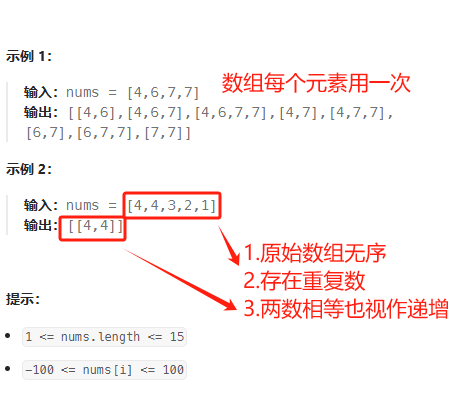
我们来思路梳理
- 递归遍历数组中的每个元素,构建所有可能的递增子序列🤔 在每层递归中使用一个集合(或类似结构)来记录已经选择过的数字,避免在同一层中重复选择相同的数字🤔在递归时,确保每次选择的元素大于或等于当前序列的最后一个元素,以保证子序列是递增的🤔 当递增子序列的长度达到两位或以上时,将其加入结果集
我们进一步来梳理回溯三要素
1
2
3
4
5
6
7
|
private void backtracking(int[] nums, int startIndex, List<Integer> path){}
|
- 回溯终止条件( 每次递归进入新层时,如果构建中的路径
path 长度至少为 2,说明找到了一个合法的递增子序列,将其加入结果集🤔)
1
2
3
| if(path.size() >= 2){
result.add(new ArrayList<>(path));
}
|
- 单层搜索过程( 使用
startIndex 开始遍历数组,从当前索引位置向后遍历, 逐一判断当前元素是否可以加入当前子序列(即该元素是否大于或等于 path 中的最后一个元素), 使用 Set 或类似的结构避免在同一层中重复选择相同的元素,防止生成重复的子序列, 加入元素后递归,回溯时移除当前元素以便继续尝试其他组合🤔)
1
2
3
4
5
6
7
8
9
10
11
12
13
14
15
| Set<Integer> used = new HashSet<>();
for(int i = startIndex; i < nums.length; i++){
if(used.contains(nums[i])){
continue;
}
if(!path.isEmpty() && nums[i] < path.getLast()){
continue;
}
path.add(nums[i]);
used.add(nums[i]);
backtracking(nums, i + 1, path);
path.removeLast();
}
|
完整的回溯代码如下
1
2
3
4
5
6
7
8
9
10
11
12
13
14
15
16
17
18
19
20
21
22
23
24
25
26
27
28
29
30
| class Solution {
List<List<Integer>> result = new ArrayList<>();
public List<List<Integer>> findSubsequences(int[] nums) {
backtracking(nums, 0, new ArrayList<>());
return result;
}
private void backtracking(int[] nums, int startIndex, List<Integer> path){
if(path.size() >= 2){
    result.add(new ArrayList<>(path));
}
Set<Integer> used = new HashSet<>();
for(int i = startIndex; i < nums.length; i++){
if(used.contains(nums[i])){
continue;
}
if(!path.isEmpty() && nums[i] < path.getLast()){
continue;
}
path.add(nums[i]);
used.add(nums[i]);
backtracking(nums, i + 1, path);
path.removeLast();
}
}
}
|
全排列
leetCode题目链接
给定一个没有重复数字的序列,返回其所有可能的全排列🤔
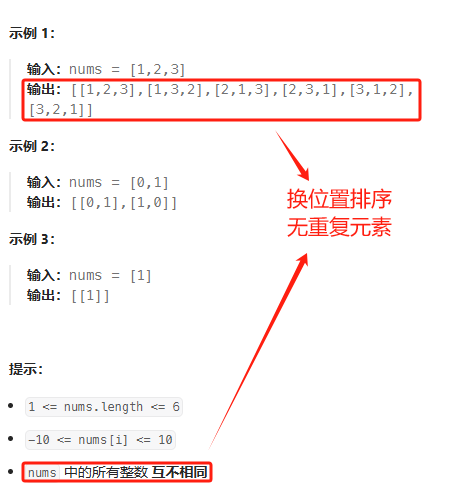
我们来思路梳理
- 通过递归构造所有可能的排列,每次从剩余未使用的数字中选择一个加入当前排列🤔 在递归过程中,将当前数字加入当前路径(即部分排列),并标记该数字已被使用。完成该排列后,回溯时撤销选择,恢复状态以尝试其他可能性🤔 当当前路径的长度等于输入序列的长度时,表示找到一个完整的排列,将其加入结果集🤔 因为输入数字没有重复,不需要考虑去重问题
我们来进一步梳理回溯三要素
1
2
3
4
5
6
7
|
List<List<Integer>> result = new ArrayList<>();
private void backtracking(int[] nums, boolean[] used, List<Integer> path){}
|
- 回溯终止条件( 当当前路径
path 的长度等于输入数组的长度时,表示已经找到一个完整的排列,将其加入结果集中🤔)
1
2
3
4
| if(path.size() == nums.length){
result.add(new ArrayList<>(path));
return;
}
|
- 单层搜索过程(遍历数组中的每一个元素,判断它是否已经被使用过。如果没有被使用,则将其加入当前排列路径🤔 递归调用后继续处理剩余未使用的数字🤔 回溯时,撤销当前的选择,标记该元素未被使用,以便继续尝试其他排列组合 )
1
2
3
4
5
6
7
8
9
10
| for(int i = 0; i < nums.length; i++){
if(used[i])continue;
path.add(nums[i]);
used[i] = true;
backtracking(nums, used, path);
used[i] = false;
path.removeLast();
}
|
完整的回溯代码如下
1
2
3
4
5
6
7
8
9
10
11
12
13
14
15
16
17
18
19
20
21
22
23
24
| class Solution {
List<List<Integer>> result = new ArrayList<>();
public List<List<Integer>> permute(int[] nums) {
boolean[] used = new boolean[nums.length];
backtracking(nums, used, new ArrayList<>());
return result;
}
private void backtracking(int[] nums, boolean[] used, List<Integer> path){
if(path.size() == nums.length){
result.add(new ArrayList<>(path));
return;
}
for(int i = 0; i < nums.length; i++){
if(used[i])continue;
path.add(nums[i]);
used[i] = true;
backtracking(nums, used, path);
used[i] = false;
path.removeLast();
}
}
}
|
全排列II
LeetCode题目链接
给定一个可包含重复数字的序列 nums ,按任意顺序 返回所有不重复的全排列
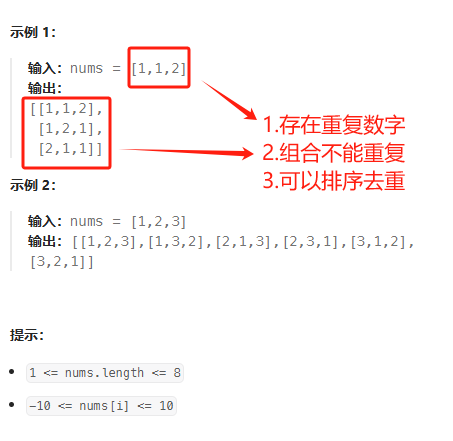
我们来进行思路梳理
- 首先对
nums 进行排序,这样相同的数字会相邻,便于后续处理重复项🤔 递归生成排列,构造排列时需要判断当前元素是否已经被使用。对于相邻的相同元素,如果上一个相同元素未被使用,当前元素也不应被使用(避免重复排列)🤔 在递归中选择未使用的数字加入当前路径(部分排列),并标记为已使用,回溯时撤销选择🤔 当当前路径的长度等于输入数组的长度时,表示找到一个完整排列,将其加入结果集中🤔
我们来进一步梳理回溯三要素
1
2
3
4
5
6
7
|
List<List<Integer>> result = new ArrayList<>();
private void backtracking(int[] nums, boolean[] used, List<Integer> path) {}
|
- 回溯终止条件( 当当前路径
path 的长度等于输入数组的长度时,表示已经找到一个完整的排列,将其加入结果集中🤔)
1
2
3
4
| if (path.size() == nums.length) {
result.add(new ArrayList<>(path));
return;
}
|
- 单层搜索过程( 遍历数组中的每一个元素,判断它是否已经被使用过。如果没有被使用,并且当前元素不是和上一个相同且上一个未被使用(避免重复),则将其加入当前排列路径🤔 递归调用后继续处理剩余未使用的数字🤔 回溯时,撤销当前的选择,标记该元素未被使用,以便继续尝试其他排列组合 )
1
2
3
4
5
6
7
8
9
10
11
| for(int i = 0; i < nums.length; i++){
if (i > 0 && nums[i] == nums[i - 1] && !used[i - 1]) continue;
if (used[i])continue;
path.add(nums[i]);
used[i] = true;
backtracking(nums, used, path);
used[i] = false;
path.remove(path.size() - 1);
}
|
完整的回溯代码如下
1
2
3
4
5
6
7
8
9
10
11
12
13
14
15
16
17
18
19
20
21
22
23
24
25
26
27
28
29
30
| class Solution {
List<List<Integer>> result = new ArrayList<>();
public List<List<Integer>> permuteUnique(int[] nums) {
Arrays.sort(nums);
boolean[] used = new boolean[nums.length];
backtracking(nums, used, new ArrayList<>());
return result;
}
private void backtracking(int[] nums, boolean[] used, List<Integer> path) {
if (path.size() == nums.length) {
result.add(new ArrayList<>(path));
return;
}
for(int i = 0; i < nums.length; i++){
if (i > 0 && nums[i] == nums[i - 1] && !used[i - 1]) continue;
if (used[i])continue;
path.add(nums[i]);
used[i] = true;
backtracking(nums, used, path);
used[i] = false;
path.remove(path.size() - 1);
}
}
}
|
总结
今天的回溯就学到这里啦,去重的话又有了不一样的处理方式,但处理逻辑大差不差,大家只需梳理清楚每层递归与回溯即可,奥利给✊✊✊