前言
又是学习LeetCode二叉树的新一天,今天还是继续学习一下二叉搜索树的内容,二叉树的基本内容快学习的差不多啦,希望博主记录的内容能够对大家有所帮助 ,一起加油吧朋友们!💪💪💪
二叉搜索树中的插入操作
LeetCode题目链接
给定二叉搜索树(BST)的根节点 root 和要插入树中的值 value ,将值插入二叉搜索树。 返回插入后二叉搜索树的根节点。 插入的值和原始二叉搜索树中的任意节点值都不同 。
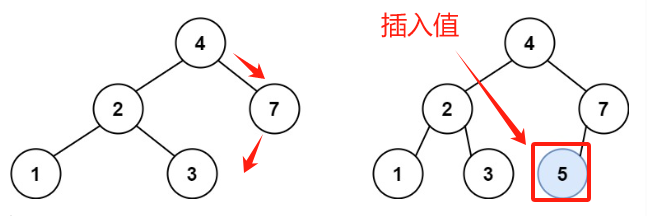
思路梳理🤔🤔
- 题目中虽然提到了存在多种有效的插入方式,但是我们可以就以遍历找到对应位置插入节点即可🤔
递归三要素梳理🤔🤔
1
2
3
|
public TreeNode insertIntoBST(TreeNode root, int val) {}
|
1
2
3
4
5
|
if(root == null){
TreeNode node = new TreeNode(val);
return node;
}
|
1
2
3
4
5
6
7
|
if(root.val > val){
root.left = insertIntoBST(root.left, val);
}else if(root.val < val){
root.right = insertIntoBST(root.right, val);
}
return root;
|
有返回值的总的递归代码如下
1
2
3
4
5
6
7
8
9
10
11
12
13
14
15
16
17
18
19
|
class Solution {
public TreeNode insertIntoBST(TreeNode root, int val) {
if(root == null){
TreeNode node = new TreeNode(val);
return node;
}
if(root.val > val){
root.left = insertIntoBST(root.left, val);
}else if(root.val < val){
root.right = insertIntoBST(root.right, val);
}
return root;
}
}
|
- 而没有返回值则需要有一个变量来记录每一次遍历的节点的父结点,当往下一层处理时就可以对父结点的左右子节点进行插值操作🤔,无返回值的递归方法如下
1
2
3
4
5
6
7
8
9
10
11
12
13
14
15
16
17
18
19
20
21
22
23
24
25
26
27
28
29
30
|
class Solution {
TreeNode parent = new TreeNode(0);
public TreeNode insertIntoBST(TreeNode root, int val) {
if(root == null){
root = new TreeNode(val);
}
traversal(root, val);
return root;
}
private void traversal(TreeNode root, int val){
if(root == null){
TreeNode node = new TreeNode(val);
if(parent.val > val){
parent.left = node;
}else{
parent.right = node;
}
return ;
}
parent = root;
if(root.val > val)traversal(root.left, val);
if(root.val < val)traversal(root.right, val);
return ;
}
}
|
- 而迭代法同理就是也要记录遍历节点的父结点进行记录追踪,然后循环找到遍历位置后对父结点进行插值操作🤔,迭代方法代码如下
1
2
3
4
5
6
7
8
9
10
11
12
13
14
15
16
17
18
19
20
21
|
class Solution {
public TreeNode insertIntoBST(TreeNode root, int val) {
if(root == null){
TreeNode node = new TreeNode(val);
return node;
}
TreeNode parent = root;
TreeNode cur = root;
while(cur != null){
parent = cur;
if(cur.val > val) cur = cur.left;
else cur = cur.right;
}
TreeNode node = new TreeNode(val);
if(val > parent.val) parent.right = node;
else parent.left = node;
return root;
}
}
|
删除二叉搜索树中的节点
LeetCode题目链接
给定一个二叉搜索树的根节点 root 和一个值 key,删除二叉搜索树中的 key 对应的节点,并保证二叉搜索树的性质不变。 返回二叉搜索树的根节点。
我们来梳理一下思路🤔🤔,我们重点就要搞清楚单层处理逻辑
- 第一种情况:递归没找到要删除的节点,遍历到空节点直接返回了
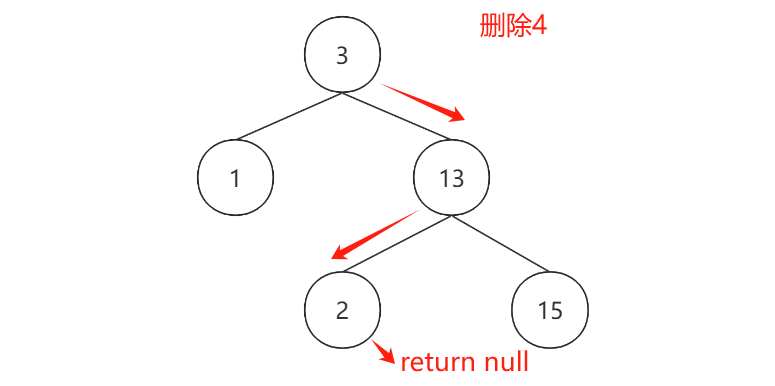
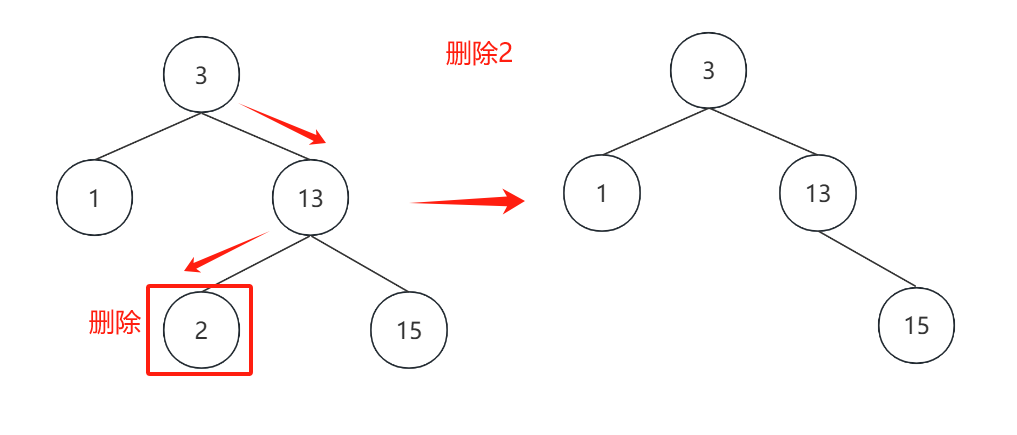
- 第二种情况:找到要删除的节点并且节点是叶子节点,直接删除返回根节点null
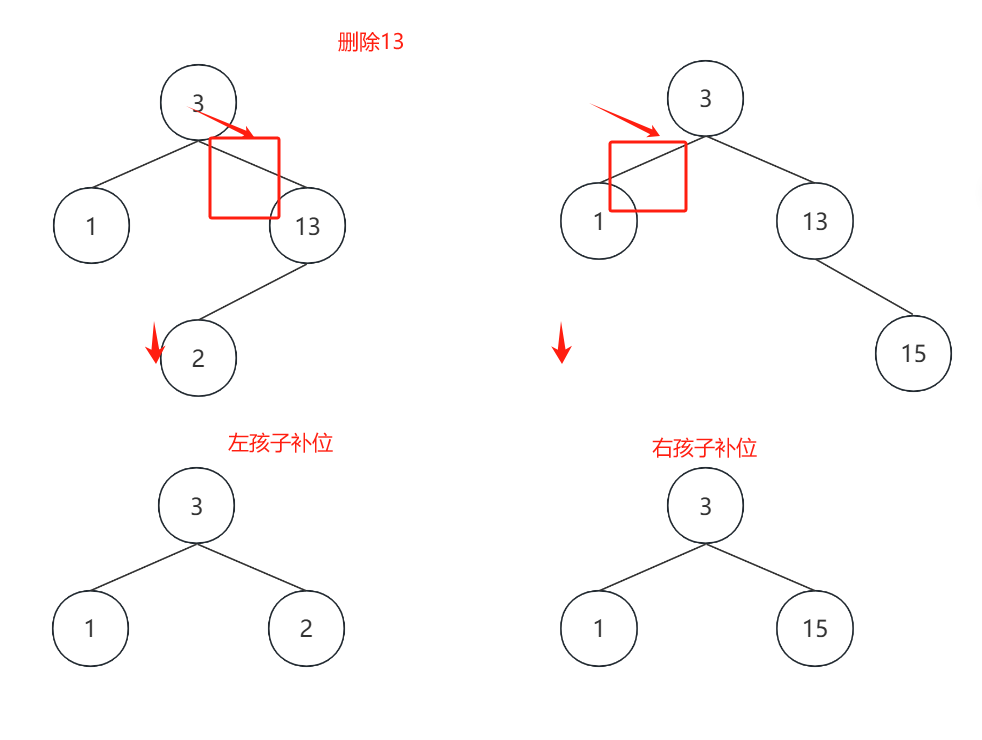
- 第五种情况:左右孩子都不为空,则将删除节点的左子树作为删除节点右子树的最左节点的左孩子🤔🤔
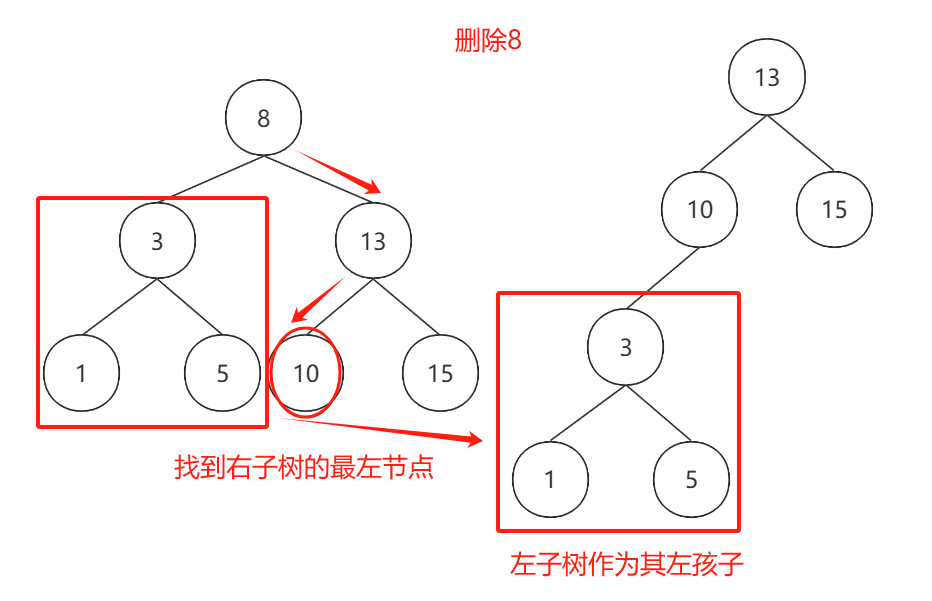
我们来梳理一下递归三要素🤔🤔
1
2
|
public TreeNode deleteNode(TreeNode root, int key) {}
|
1
2
3
4
5
6
7
8
9
10
11
12
13
14
15
16
17
18
19
|
if(root == null) return root;
if(root.val == key){
if(root.left == null && root.right == null) {
return null;
} else if(root.left == null){
return root.right;
} else if(root.right == null){
return root.left;
}else{
TreeNode node = root.right;
while(node.left != null){
node = node.left;
}
node.left = root.left;
root = root.right;
return root;
}
}
|
1
2
3
4
|
if(root.val > key) root.left = deleteNode(root.left, key);
if(root.val < key) root.right = deleteNode(root.right, key);
return root;
|
迭代法的话有点复杂这里我们就不写了,感兴趣的话大家自己可以写一下🫡🫡🫡
修剪二叉搜索树
LeetCode题目链接
给一个二叉树并指定最小数值边界和最大数值边界,通过修剪二叉树使得二叉树的所有节点值在这个闭区间中,返回修剪好的二叉搜索树的根节点。
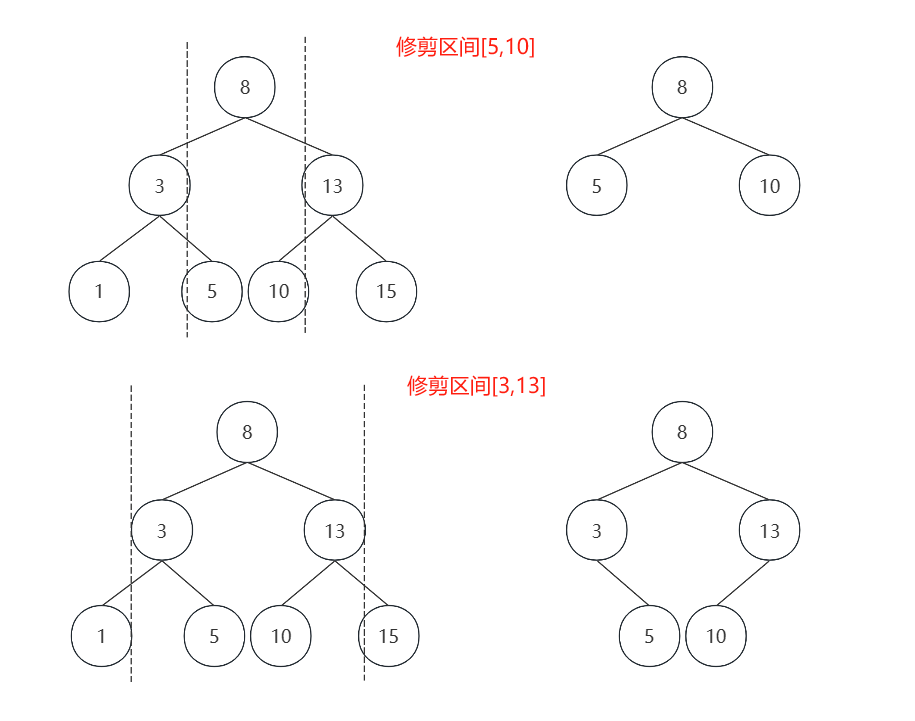
我们来思路梳理一下🤔🤔
- 从上图中可以看到如果单纯去判断
if(root.val <low || root >high) return null 的话,则上图中修剪区间[5,10]的时候就只能剪出一个8了,所以这该怎么处理呢?🤔🤔就是在上图中修剪区间为[5,10]时如果剪掉0节点的时候它的右孩子不为空就也需要修剪,我们将其右孩子连接上其父结点继续修剪即可😮😮
我们进一步来梳理递归三要素
1
2
3
|
TreeNode trimBST(TreeNode root, int low, int high){}
|
1
2
|
if(root == null)return null;
|
1
2
3
4
5
6
7
8
9
10
11
12
| if(root.val < low){
TreeNode right = trimBST(root.right, low, high);
return right;
}
if(root.val > high){
TreeNode left = trimBST(root.left, low, high);
return left;
}
root.left = trimBST(root.left, low, high);
root.right = trimBST(root.right, low, high);
return root;
|
递归完整代码如下
1
2
3
4
5
6
7
8
9
10
11
12
13
14
15
16
17
18
|
class Solution {
public TreeNode trimBST(TreeNode root, int low, int high) {
if(root == null)return null;
if(root.val < low){
TreeNode right = trimBST(root.right, low, high);
return right;
}
if(root.val > high){
TreeNode left = trimBST(root.left, low, high);
return left;
}
root.left = trimBST(root.left, low, high);
root.right = trimBST(root.right, low, high);
return root;
}
}
|
我们来梳理下迭代法的处理方式🤔🤔
- 因为二叉搜索树是有序的,不需要用栈来存储节点。我们循环处理的话需要注意,因为涉及判断要不要把左孩子的右子树连接到上一层,所以相当于循环处理三层,首先找到一个边界内的头节点,然后修剪左孩子(相当于往小边界找,若找到比边界还小则把右孩子连接处理节点的父结点直到空节点),然后右孩子的修剪逻辑类似。
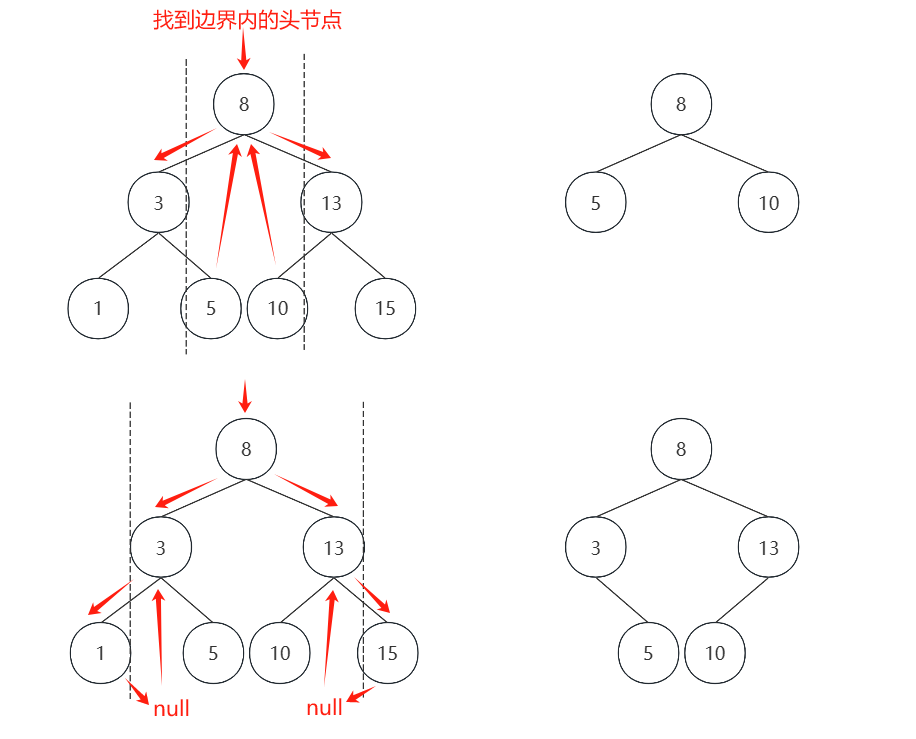
迭代代码如下
1
2
3
4
5
6
7
8
9
10
11
12
13
14
15
16
17
18
19
20
21
22
23
24
25
26
27
28
29
30
|
class Solution {
public TreeNode trimBST(TreeNode root, int low, int high) {
if(root == null)return null;
while(root != null && (root.val < low || root.val > high)){
if(root.val < low)root = root.right;
else root = root.left;
}
TreeNode node = root;
while(node != null){
while(node.left != null && node.left.val < low){
node.left = node.left.right;
}
node = node.left;
}
node = root;
while(node != null){
while(node.right != null && node.right.val > high){
node.right = node.right.left;
}
node = node.right;
}
return root;
}
}
|
总结
二叉树的内容基本就要学习的差不多了,还剩下一些,我们继续加油,后面开始回溯的基本内容的学习✊✊✊